
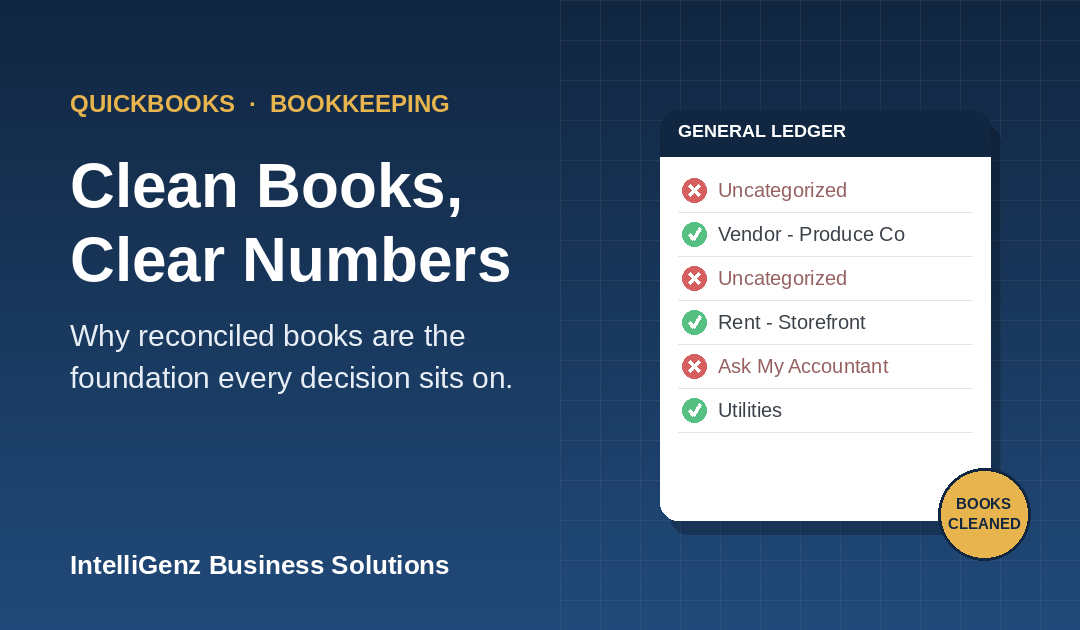
It’s a slow Tuesday afternoon and you decide to actually look at your QuickBooks Balance Sheet instead of just glancing at the bank balance like usual. And there it is — a line called “Uncategorized Expenses” or “Ask My Accountant” sitting at $14,000. You don’t remember it being that big. You definitely don’t remember what half of it even is.
Here’s the thing: that bucket didn’t happen overnight. It’s the sum of a hundred small moments — a receipt shoved in a drawer during a Friday dinner rush, a bank feed suggestion you clicked “accept all” on without really looking, an invoice that got coded to the wrong category because you were three tickets deep and just needed it done.
Why this happens even to careful owners
QuickBooks’ bank feed has gotten noticeably smarter this year — it now offers improved AI-powered category and vendor suggestions, with color-coded signals showing which ones actually need your attention. That’s a real improvement. But smarter suggestions still need a human to check them, not just rubber-stamp them. When you’re running a retail floor or a kitchen, “I’ll fix it later” is a completely reasonable thing to say in the moment — the problem is later rarely comes, and the pile just keeps growing.
What dirty books actually cost you
It’s not just an annoyance. Messy books cost you in three specific ways:
You make decisions on numbers that aren’t real. If expenses are miscategorized, your margin on your best-selling item might look better — or worse — than it actually is. You could be pricing a product wrong for months without knowing it.
Tax season gets expensive. Uncategorized transactions mean missed deductions, rushed guesswork, and a bigger bill to your CPA for cleanup work they have to do before they can even start your return.
You lose leverage exactly when you need it most. If you ever apply for a loan, a line of credit, or decide to sell the business, the first thing anyone asks for is clean financials. Books that don’t reconcile are a red flag that can slow down or kill a deal.
Your new dashboard is only as honest as what feeds it
QuickBooks recently rolled out KPI dashboards and scorecards for cash flow, P&L, and balance sheet health to Essentials and Plus plans — a feature that used to be Advanced-only. It’s a genuinely useful upgrade for seeing your business at a glance. But a dashboard doesn’t know the difference between a correctly coded expense and a guess. If the data underneath is off, the dashboard just shows you the wrong story faster, and with more confidence.
The fix isn’t complicated, just overdue
If it’s been a while since your accounts were actually reconciled — not just “close enough” — that’s not a character flaw, it’s just what happens when you’re busy running a business. We offer a books cleanup specifically for owners in this spot: we go back through your bank and credit card statements, get everything properly reconciled and categorized, and get you back to a set of books you can actually trust.
And once your books are clean, that’s when the real value starts — because clean books are what let us help you see your true margins, plan your cash flow with confidence, and build toward the profitability goals you actually care about, not just survive month to month.
If that “Ask My Accountant” pile has been quietly growing on you, let’s talk about getting it cleaned up — and turning your books into something you can actually use.