
The Monday Bill Run
Every retailer and restaurant owner knows this ritual: it’s the first of the month, and you’re sitting down to pay vendors. Produce supplier, linen service, POS software, the plumber who fixed the walk-in cooler. Fifteen, twenty bills, each one either written as a check, run through your bank’s bill pay, or paid by card — and each one nibbling away a fee before the vendor even sees the money.
It’s not a huge number on any single bill. But run twenty payments a month through a bank ACH transfer at $1 to $3 each, or a percentage-based card fee, and you’re looking at $20 to $60 a month — $240 to $720 a year — just to move money you already have to people you already owe. For a business running on 5 to 10% margins, that’s not nothing.
What Changed
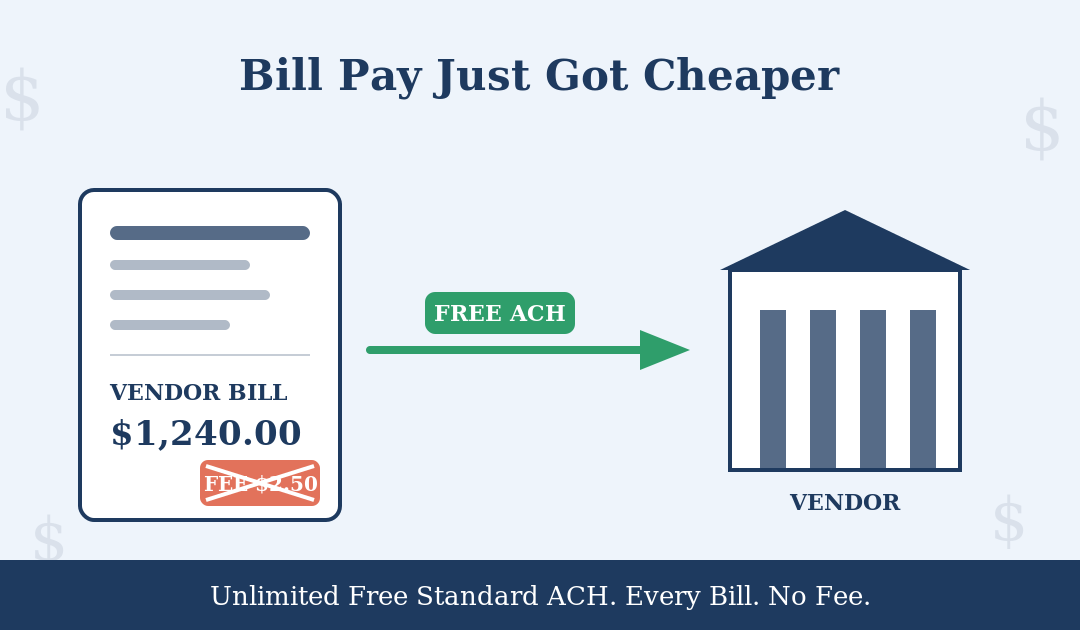
In its June 2026 product update, Intuit added unlimited free standard ACH payments in QuickBooks Bill Pay — no per-transaction cost to pay any number of bills. You can manage accounts payable, schedule payments, and reconcile the data all in one place, without hopping over to your bank’s site or app. Standard ACH is free; next-day ACH and paper checks still carry a fee, so the savings show up when you can plan a few days ahead on non-urgent bills.
Why It Matters More for Retail and Restaurants
If you’re in a business with thin margins and a lot of small vendor relationships — food suppliers, packaging, linens, maintenance contracts — you’re paying more bills, more often, than a typical service business. That means the fee savings compound faster. It also means the cash you’re not spending on transaction fees stays in your operating account, which is exactly the account you’re watching most closely when payroll and rent are due the same week.
This isn’t a dramatic fix. It won’t rescue a business that’s genuinely short on cash. But it’s the kind of small, recurring leak that’s easy to ignore because no single instance feels significant — and those are usually the leaks worth plugging first, because you don’t have to change anything about how you run the business to capture the savings.
The Practical Step
If you’re already on QuickBooks Online and using Bill Pay, check whether your vendor payments are set to standard ACH by default, or whether they’ve defaulted to next-day (which still costs). A five-minute settings check could be worth a few hundred dollars a year with zero downside.
Where This Fits Into the Bigger Picture
A free ACH transfer is a nice line item, but it’s a small piece of the real question: is your cash flow actually healthy, or does it just look healthy? Fee savings help at the margins — they don’t fix a business that’s chronically tight between what comes in and what goes out. That’s the deeper work we do with retail and restaurant clients: building a clear picture of where your cash actually goes and when, so decisions like this one are easy calls instead of guesswork.